

















Despite a “hiccup,” the Orion ship was able to perform a crucial “engine burn” on December 5th, allowing it to continue on schedule back to Earth. The unexpected glitch occurred one day earlier when the ship’s power unit erroneously shut off 4 devices that act as a downstream power source for the vehicle’s propulsion and heating systems. There are actually eight such devices, and another one of these accidently “opened” but NASA was able to remotely close it. Most importantly, no critical functions were disrupted during this electrical blip.
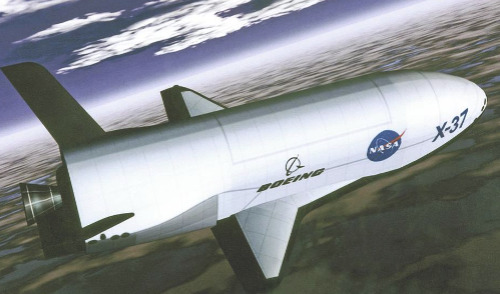
Since 2010, 2 purported X-37B spacecrafts have now completed 6 Orbital Test Vehicle (OTV) missions. Developed by Boeing, the OBTs are similar to the retired space shuttles, such as the Discovery, which completed its last mission in 2011. However, Boeing’s ships are considerably smaller and piloted by automation. While the old space shuttles were about 37 meters long and needed a human pilot to operate, the X-37B is just under 9 meters in length and does not require people on board.
The longest time an X-37B vehicle has been in orbit was 908 days. This took place during the most recent test flight, which finally concluded on November 12th when the spacecraft landed at the Kennedy Space Center, which where the Orion ship launched from just four days later. Most of the OTV mission activities are classified, which of course has fueled conspiracy theories and suspicion from both China and Russia. Although it is public information that in 2021, the most recent OTV-6 mission deployed a “FalconSat-8” satellite that currently remains in the planet’s orbit. It has also been released that, during the most recent flight, an experiment was conducted to test radiation’s impact on plant seeds.
—
Until Next Time,
The information has been obtained from sources considered reliable but we do not guarantee that the foregoing material is accurate or complete. Any opinions are those of Serving Those Who Serve writers and not necessarily those of RJFS or Raymond James. Any information is not a complete summary or statement of all available data necessary for making an investment decision and does not constitute a recommendation. Investing involves risk and you may incur a profit or loss regardless of strategy suggested. Every investor’s situation is unique and you should consider your investment goals, risk tolerance, and time horizon before making any investment or financial decision. Prior to making an investment decision, please consult with your financial advisor about your individual situation. While we are familiar with the tax provisions of the issues presented herein, as Financial Advisors of RJFS, we are not qualified to render advice on tax or legal matters. You should discuss tax or legal matters with the appropriate professional. **
An update on NASA’s unmanned mission to the lunar orbit, plus Boeing’s X-37B spaceship lands after over 900 days in orbit.
After months of delays, the first phase of NASA’s Artemis missions finally launched in the middle of last month. Despite a minor blip, there were no critical failures and the Orion spacecraft, built by Elon Musk’s Space-X company, splashed down in the Pacific Ocean on Sunday the 11th. Also, as part of the OTV-6 mission, Boeing’s mysterious X-37B spaceship touched back down to Earth on November 12th.
After a series of delays this prior Spring and Summer, NASA at last had a successful launch of the Orion spacecraft. This first mission in a series of planned trips to the moon, Artemis I, was an unmanned test that lasted roughly 25 days. After launching from Florida’s Kennedy Space Center on November 16th and orbiting the Earth’s natural satellite, returning stunning images, the spacecraft fell into the Pacific Ocean on December 11th, approximately 30 miles off the coast of San Diego, CA.
Despite a “hiccup,” the Orion ship was able to perform a crucial “engine burn” on December 5th, allowing it to continue on schedule back to Earth. The unexpected glitch occurred one day earlier when the ship’s power unit erroneously shut off 4 devices that act as a downstream power source for the vehicle’s propulsion and heating systems. There are actually eight such devices, and another one of these accidently “opened” but NASA was able to remotely close it. Most importantly, no critical functions were disrupted during this electrical blip.
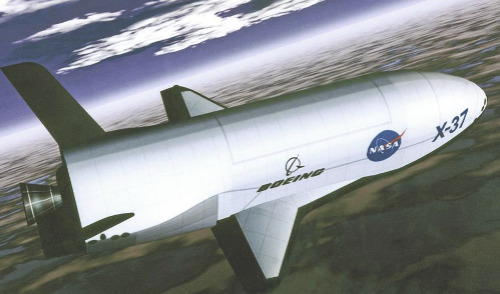
Since 2010, 2 purported X-37B spacecrafts have now completed 6 Orbital Test Vehicle (OTV) missions. Developed by Boeing, the OBTs are similar to the retired space shuttles, such as the Discovery, which completed its last mission in 2011. However, Boeing’s ships are considerably smaller and piloted by automation. While the old space shuttles were about 37 meters long and needed a human pilot to operate, the X-37B is just under 9 meters in length and does not require people on board.
The longest time an X-37B vehicle has been in orbit was 908 days. This took place during the most recent test flight, which finally concluded on November 12th when the spacecraft landed at the Kennedy Space Center, which where the Orion ship launched from just four days later. Most of the OTV mission activities are classified, which of course has fueled conspiracy theories and suspicion from both China and Russia. Although it is public information that in 2021, the most recent OTV-6 mission deployed a “FalconSat-8” satellite that currently remains in the planet’s orbit. It has also been released that, during the most recent flight, an experiment was conducted to test radiation’s impact on plant seeds.
—
Until Next Time,
The information has been obtained from sources considered reliable but we do not guarantee that the foregoing material is accurate or complete. Any opinions are those of Serving Those Who Serve writers and not necessarily those of RJFS or Raymond James. Any information is not a complete summary or statement of all available data necessary for making an investment decision and does not constitute a recommendation. Investing involves risk and you may incur a profit or loss regardless of strategy suggested. Every investor’s situation is unique and you should consider your investment goals, risk tolerance, and time horizon before making any investment or financial decision. Prior to making an investment decision, please consult with your financial advisor about your individual situation. While we are familiar with the tax provisions of the issues presented herein, as Financial Advisors of RJFS, we are not qualified to render advice on tax or legal matters. You should discuss tax or legal matters with the appropriate professional. **
An update on NASA’s unmanned mission to the lunar orbit, plus Boeing’s X-37B spaceship lands after over 900 days in orbit.
After months of delays, the first phase of NASA’s Artemis missions finally launched in the middle of last month. Despite a minor blip, there were no critical failures and the Orion spacecraft, built by Elon Musk’s Space-X company, splashed down in the Pacific Ocean on Sunday the 11th. Also, as part of the OTV-6 mission, Boeing’s mysterious X-37B spaceship touched back down to Earth on November 12th.
After a series of delays this prior Spring and Summer, NASA at last had a successful launch of the Orion spacecraft. This first mission in a series of planned trips to the moon, Artemis I, was an unmanned test that lasted roughly 25 days. After launching from Florida’s Kennedy Space Center on November 16th and orbiting the Earth’s natural satellite, returning stunning images, the spacecraft fell into the Pacific Ocean on December 11th, approximately 30 miles off the coast of San Diego, CA.
Despite a “hiccup,” the Orion ship was able to perform a crucial “engine burn” on December 5th, allowing it to continue on schedule back to Earth. The unexpected glitch occurred one day earlier when the ship’s power unit erroneously shut off 4 devices that act as a downstream power source for the vehicle’s propulsion and heating systems. There are actually eight such devices, and another one of these accidently “opened” but NASA was able to remotely close it. Most importantly, no critical functions were disrupted during this electrical blip.
Since 2010, 2 purported X-37B spacecrafts have now completed 6 Orbital Test Vehicle (OTV) missions. Developed by Boeing, the OBTs are similar to the retired space shuttles, such as the Discovery, which completed its last mission in 2011. However, Boeing’s ships are considerably smaller and piloted by automation. While the old space shuttles were about 37 meters long and needed a human pilot to operate, the X-37B is just under 9 meters in length and does not require people on board.
The longest time an X-37B vehicle has been in orbit was 908 days. This took place during the most recent test flight, which finally concluded on November 12th when the spacecraft landed at the Kennedy Space Center, which where the Orion ship launched from just four days later. Most of the OTV mission activities are classified, which of course has fueled conspiracy theories and suspicion from both China and Russia. Although it is public information that in 2021, the most recent OTV-6 mission deployed a “FalconSat-8” satellite that currently remains in the planet’s orbit. It has also been released that, during the most recent flight, an experiment was conducted to test radiation’s impact on plant seeds.
—
Until Next Time,
The information has been obtained from sources considered reliable but we do not guarantee that the foregoing material is accurate or complete. Any opinions are those of Serving Those Who Serve writers and not necessarily those of RJFS or Raymond James. Any information is not a complete summary or statement of all available data necessary for making an investment decision and does not constitute a recommendation. Investing involves risk and you may incur a profit or loss regardless of strategy suggested. Every investor’s situation is unique and you should consider your investment goals, risk tolerance, and time horizon before making any investment or financial decision. Prior to making an investment decision, please consult with your financial advisor about your individual situation. While we are familiar with the tax provisions of the issues presented herein, as Financial Advisors of RJFS, we are not qualified to render advice on tax or legal matters. You should discuss tax or legal matters with the appropriate professional. **
The FedLife Podcast is your in-depth, biweekly deep dive into the world of federal benefits and retirement planning. Hosted by federal benefits expert Ed Zurndorfer and Dan Sipe of Serving Those Who Serve, each 30-minute episode unpacks the complexities of FERS and CSRS retirement, FEHB and Medicare, survivor benefits, tax planning, and more. Designed for federal employees and retirees who want more than just the basics, FedLife goes beyond the headlines to explore the rules, nuances, and strategies that can make a meaningful difference in your retirement. Remember: it’s your Fed life, make it a great one.

The Fed15 Podcast is your weekly 15(ish)-minute briefing on federal benefits and financial planning, built specifically for federal employees and retirees. Hosted by Dan Sipe and Katelyn Murray of Serving Those Who Serve, each episode delivers clear, actionable guidance on topics like FERS and CSRS retirement, TSP strategies, FEHB, survivor benefits, tax planning, and more! Whether you’re five years from retirement or already there, The Fed15 helps you cut through the noise, avoid costly mistakes, and make confident decisions about your federal benefits.