


















This is the first of two FEDZONE columns discussing the tax consequences of selling one’s personal residence.

Edward A. Zurndorfer
Although the COVID-19 pandemic wreaked havoc on many parts of the U.S. economy during 2020, one part of the U.S. economy had an exceptional year. Residential real estate sales soared to their best year ever in many parts of the U.S, partially a result of the lowest mortgage rates in sixty years. Perhaps even better news is that most residential homeowners sold their homes during 2020 at a net gain.
Two questions for personal residence owners who sold their residences now arise, namely: (1) What are the tax consequences of selling one’s personal residence at a net gain; and (2) how a personal residence sale is reported on one’s 2020 federal income tax return. This is the first of two FEDZONE columns discussing the tax consequences of selling one’s personal residence.
The following are the tax rules with respect to the sale of an individual’s primary personal residence, as detailed in Internal Revenue Code (IRC) Section 121.
Example 1. Jean owns a home located in Washington, DC. She also owns a home in Boca Raton, Florida which she uses during the winter (December, January and February). The house in Washington, D.C. is Jean’s primary personal residence because she lives there most of the calendar year.
Example 2. Peter owns a home in Fairfax, VA, but he lives in Ft. Lauderdale, Florida, in a home that he rents. The home in Ft. Lauderdale is his main home and would not qualify for the capital gain exclusion if sold because he rents it and does not own it.
Individuals who live in more than one residence use the simple rule of where they live for most of the year in order to determine their primary personal residence. In some situations, other factors may be involved, including: (1) Place of employment; (2) location of family members’ main home; (3) mailing address; (4) legal address for tax returns, driver’s license; (5) banking location; and (6) location of clubs and churches to which taxpayer belongs.
The following is a short version of determining the gain or loss resulting from the sale of a personal residence:
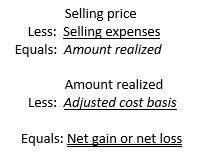
Note the following:
IRS Form 1099-S (Proceeds from Real Estate Transactions) is used to report the home sales price. Some problems associated with Form 1099-S include: (1) the form does not include loan assumptions or services rendered; and (2) the form may not be issued if the settlement company (or settlement real estate attorney) believes that the entire sale proceeds are excludable from taxation (the exclusion of capital gains tax upon the sale of a personal residence is discussed in the next FEDZONE column).
The worksheet below summarizes how the amount realized or adjusted cost basis in the home are calculated:
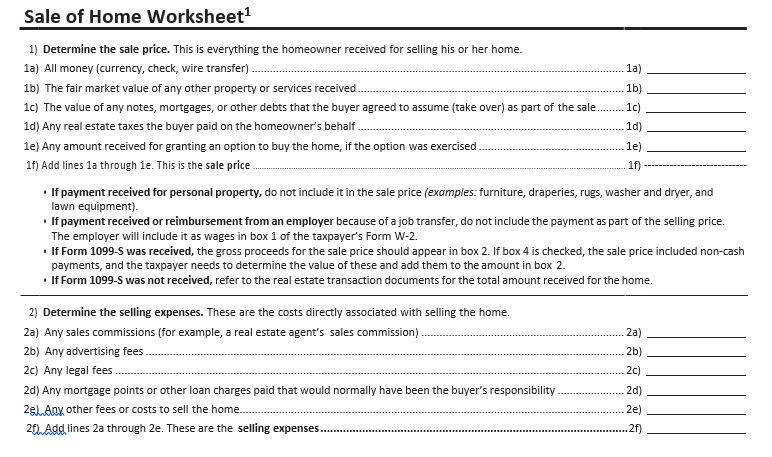
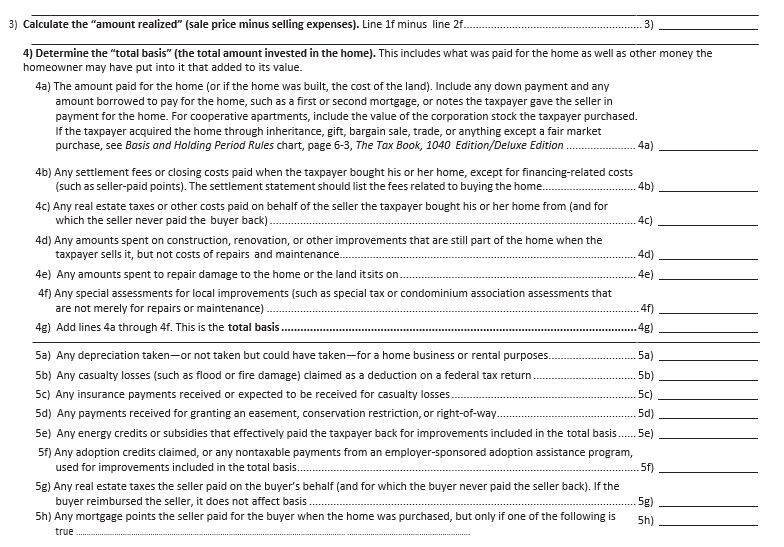
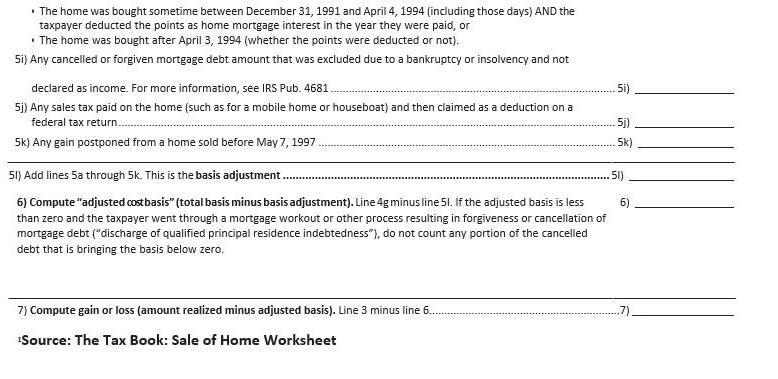
If the there is a net gain on line 7, then the net gain may qualify for a capital gains exclusion from taxation. If there is a net loss on line 7, the net loss cannot be deducted on one’s income taxes. But in case of a net loss, the home seller does not need to pay any tax on the net sale proceeds received from selling the home.
The next FEDZONE column will discuss the reporting of a personal residence home sell on one’s federal income tax return, including calculating the exclusion of capital gain from taxation.
The FedLife Podcast is your in-depth, biweekly deep dive into the world of federal benefits and retirement planning. Hosted by federal benefits expert Ed Zurndorfer and Dan Sipe of Serving Those Who Serve, each 30-minute episode unpacks the complexities of FERS and CSRS retirement, FEHB and Medicare, survivor benefits, tax planning, and more. Designed for federal employees and retirees who want more than just the basics, FedLife goes beyond the headlines to explore the rules, nuances, and strategies that can make a meaningful difference in your retirement. Remember: it’s your Fed life, make it a great one.

The Fed15 Podcast is your weekly 15(ish)-minute briefing on federal benefits and financial planning, built specifically for federal employees and retirees. Hosted by Dan Sipe and Katelyn Murray of Serving Those Who Serve, each episode delivers clear, actionable guidance on topics like FERS and CSRS retirement, TSP strategies, FEHB, survivor benefits, tax planning, and more! Whether you’re five years from retirement or already there, The Fed15 helps you cut through the noise, avoid costly mistakes, and make confident decisions about your federal benefits.