

















Individuals Unable to Pay Balance Due on 2022 Federal Income Tax Return Should Still File

Edward A. Zurndorfer –
With less than a week remaining until the 2022 Federal income tax return filing deadline of April 18, 2023, those individuals who have a balance due on their 2022 tax returns but who do not have the money to pay the balance due should nevertheless file their returns. This column discusses possible payment options and penalties for individuals unable to pay the balance due on their 2022 federal income tax returns.
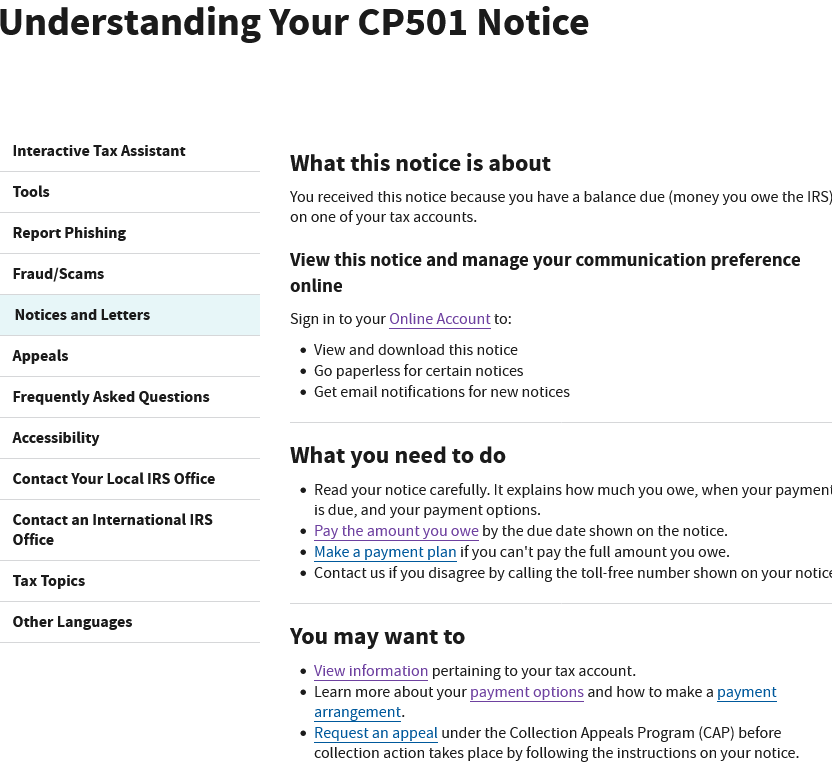
One action that individuals unable to pay the balance due on their 2022 federal income tax return should avoid is to not file their returns or, to not request a filing extension. They should instead pay as much of the balance due as they can with their completed tax return or if they have not completed preparing their return, pay as much as they can with the filing extension (IRS Form 4868 – Application for Automatic Extension of Time to File U.S. Individual Income Tax Return – can be downloaded here.) If possible, they should pay any remaining balance due within a few months after filing the return or the extension. Note that if an individual’s 2022 federal income tax return is filed with a balance due without a full payment payment, the IRS will mail a CP501 Notice (“Notice of Balance Due”) to the individual. The cost for late payment to the IRS is interest at the federal rate plus a late payment penalty of 0.5 percent monthly of the amount due, with a 25 percent maximum penalty. The following is from the IRS web site www.irs.gov with respect to CF501 Notices:
Another option is to pay the balance due in full by using a debit or a credit card. The charge for the credit card payment option includes a percentage of tax as a convenience fee plus interest at the credit card rate. Information about paying the IRS by debit or credit can be found at www.irs.gov/payments/pay-taxes-by-credit-or-debit-card.
Other options for paying a balance due are an installment agreement with the IRS, including:
An individual may qualify to apply online (www.irs.gov) if:
There are user fees associated with Form 9465, as summarized in the following table:
| Payment Method | Applicable Fee |
| Checking, money order, or credit card | $225 |
| Electronic funds transfer | $107 |
| Payroll deduction installment agreement | $225 |
Interest and late payment penalties continue to apply during the installment period. The late payment penalty is 0.25 percent per month of the amount owed. If the individual’s tax return had not been filed in a timely fashion, then the penalty would be 0.5 percent per month.
An individual who files Form 4868 with the IRS is requesting a six-month extension to file his or her federal income tax return. An extension to file is not an extension to pay. In fact, if an individual expects to receive a refund upon filing his or her tax return, then filing Form 4868 is not necessary.
Those individuals who expect to owe upon filing their tax return within the six-month extension period must pay with Form 4868 the amount they think they will owe once their returns are filed.
An individual can request a six-month extension to pay by filing IRS Form 1127 (Application for Extension of Time for Payment of Tax Due to Undue Hardship – can be downloaded at here.) by the due date for filing 2022 tax returns, April 18, 2023. The individual must demonstrate that he or she cannot sell assets or borrow to pay the balance due except under terms that would cause severe loss and undue hardship. A net worth statement – a statement of assets and liabilities – and cash flow – a statement of receipts and disbursements – for three months preceding the due date of the return are required. For this year, the months of January, February and March 2023 would be required. An IRS’ approved Form 1127 will eliminate an individual’s late payment penalty but has no effect on IRS interest charges.
The following table summarizes selected IRS penalties the IRS imposes on individuals:
| Violation | Penalty |
| Failure to disclose foreign financial assets | $10,000 penalty (increased if failure continues after notification). |
| Failure to file return (late filing penalty) | 5% of unpaid balance for each month or part of a month the return is late. Maximum 25%. IF the return is more than 60 days late, the minimum penalty is the lesser of $450 (for 2022) or tax due. There is no penalty if the return shows no tax due. If the individual is subject to failure to file and failure to pay penalties for the same month, the failure to file penalty is reduced by the failure to pay penalty. |
| Failure to pay tax (late payment penalty) | 0.5% of unpaid balance for each month or part of a month there is an unpaid balance. Maximum 25%. The penalty is half the usual rate for any months an installment agreement is in effect. |
| Fraudulent failure to file tax return | Section 6651(a)(1) penalty is replaced with 15% of tax per month not to exceed 75% of tax. |
| Underpayment of estimated tax by individuals | Interest at federal rate for underpayments applied to the underpaid amount for the number of days late. |
| Bad check used to pay tax | 2% of check amount, subject to $25 minimum (100% of check if less). |
| Accuracy-related penalty | 20% of underpayment attributable to any of the following: • Negligence or disregard of rules or regulations – failure to make a reasonable effort to comply with the tax law, including failure to keep adequate records or to use ordinary and reasonable care in preparing a return. • Substantial understatement of income tax – generally an understatement that is more than 10% of the correct tax and greater than $5,000. • Substantial valuation misstatement – generally a valuation that is 150% or more of the determined value and causes a tax understatement of more than $5,000. (Penalty is 40% in the case of gross valuation misstatement.) |
Penalties are not imposed if the individual can show that the failure was due to reasonable cause rather than willful neglect. The individual may proactively request abatement, before any notice is received, by submitting a written statement to the director of the service center where the return was filed. All facts showing reasonable cause for the failure should be included. A signed declaration stating the following should be included:
“Under penalties of perjury, I declare that I have examined this statement and accompanying information and, to the best of my knowledge and belief, they are true, correct and complete.”
Reasonable causes for late filing include: (1) Death or serious illness of the individual or an immediate family member; (2) unavoidable absence of the individual on the filing date; or (3) destruction of the individual’s residence or business.
A reasonable cause for failure to pay means that the individual exercised ordinary business care and prudence to provide for payment of the tax but was still unable to pay without severe financial loss. Lavish expenditures, speculative investments or investments in illiquid assets show that the individual was not financially careful or prudent.
Reasonable cause for failure to pay also exists if payment of the tax would result in a significant hardship for the individual. For example, an individual was unable to pay the tax due because the individual needed the money to pay necessary medical expenses. Similarly, significant hardship exists if the individual would have been able to pay the tax due by liquidating assets that are well below fair market value.
Edward A. Zurndorfer is a Certified Financial Planner, Chartered Life Underwriter, Chartered Financial Consultant, Chartered Federal Employee Benefits Consultant, Certified Employees Benefits Specialist and IRS Enrolled Agent in Silver Spring, MD. Tax planning, Federal employee benefits, retirement and insurance consulting services offered through EZ Accounting and Financial Services, and EZ Federal Benefits Seminars, located at 833 Bromley Street – Suite A, Silver Spring, MD 20902-3019 and telephone number 301-681-1652. Raymond James is not affiliated with and does not endorse the opinions or services of Edward A. Zurndorfer or EZ Accounting and Financial Services. The information has been obtained from sources considered to be reliable, but we do not guarantee that the foregoing material is accurate or complete. While the employees of Serving Those Who Serve are familiar with the tax provisions of the issues presented herein, as Financial Advisors of RJFS, we are not qualified to render advice on tax or legal matters. You should discuss tax or legal matters with the appropriate professional.
The FedLife Podcast is your in-depth, biweekly deep dive into the world of federal benefits and retirement planning. Hosted by federal benefits expert Ed Zurndorfer and Dan Sipe of Serving Those Who Serve, each 30-minute episode unpacks the complexities of FERS and CSRS retirement, FEHB and Medicare, survivor benefits, tax planning, and more. Designed for federal employees and retirees who want more than just the basics, FedLife goes beyond the headlines to explore the rules, nuances, and strategies that can make a meaningful difference in your retirement. Remember: it’s your Fed life, make it a great one.

The Fed15 Podcast is your weekly 15(ish)-minute briefing on federal benefits and financial planning, built specifically for federal employees and retirees. Hosted by Dan Sipe and Katelyn Murray of Serving Those Who Serve, each episode delivers clear, actionable guidance on topics like FERS and CSRS retirement, TSP strategies, FEHB, survivor benefits, tax planning, and more! Whether you’re five years from retirement or already there, The Fed15 helps you cut through the noise, avoid costly mistakes, and make confident decisions about your federal benefits.