











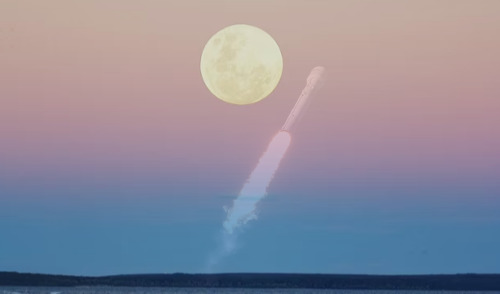
Back in March, at the Kennedy Space Station in Florida, the Orion spacecraft and its rocket took a four-mile journey to “LaunchPad 39D” where a test was conducted. There was a countdown to blast-off, but nothing blasted off. Around the time NASA detailed the plans for this “wet dress rehearsal” to the public, the goal was to launch the first Artemis mission in May.
Not until the end of August did it look like NASA’s first return-trip to the Moon, albeit unmanned, was actually going to happen. However, one of the engines had an issue cooling off after re-fueling, and the August 29th launch was scrapped. Launch windows that were opened on September 2nd and 6th also ran into technical issues, and after the September 20th window closed, the Orion spaceship still sat on the launchpad, unlaunched. Three more days later, a hurricane named Ian started forming out in the Atlantic. The category-5 storm forced NASA to move the rocket and the spacecraft four miles back to the hangar as a precaution. The devastating storm did not cause damage to the Orion or its Space Launch System (SLS).
NASA has recently announced that the Orion and its rocket could be rolled back to the launchpad as soon as November 4th, with hopes to blast-off during a 69-minute window that will open on November 14th at 12:07 AM. The mission is set to last 25 days, reaching the lunar orbit, and returning to Earth by landing in the Pacific Ocean. The purpose of the operation is to ensure the rocket and the craft’s subsystems perform correctly so upcoming missions can safely include astronauts. There are 2 back-up windows planned on November 16th at 1:04 AM (eastern time) and November 19th at 1:45 AM.
—
Until Next Time,

The information has been obtained from sources considered reliable but we do not guarantee that the foregoing material is accurate or complete. Any opinions are those of Serving Those Who Serve writers and not necessarily those of RJFS or Raymond James. Any information is not a complete summary or statement of all available data necessary for making an investment decision and does not constitute a recommendation. Investing involves risk and you may incur a profit or loss regardless of strategy suggested. Every investor’s situation is unique and you should consider your investment goals, risk tolerance, and time horizon before making any investment or financial decision. Prior to making an investment decision, please consult with your financial advisor about your individual situation. While we are familiar with the tax provisions of the issues presented herein, as Financial Advisors of RJFS, we are not qualified to render advice on tax or legal matters. You should discuss tax or legal matters with the appropriate professional. **
The FedLife Podcast is your in-depth, biweekly deep dive into the world of federal benefits and retirement planning. Hosted by federal benefits expert Ed Zurndorfer and Dan Sipe of Serving Those Who Serve, each 30-minute episode unpacks the complexities of FERS and CSRS retirement, FEHB and Medicare, survivor benefits, tax planning, and more. Designed for federal employees and retirees who want more than just the basics, FedLife goes beyond the headlines to explore the rules, nuances, and strategies that can make a meaningful difference in your retirement. Remember: it’s your Fed life, make it a great one.
The Fed15 Podcast is your weekly 15(ish)-minute briefing on federal benefits and financial planning, built specifically for federal employees and retirees. Hosted by Dan Sipe and Katelyn Murray of Serving Those Who Serve, each episode delivers clear, actionable guidance on topics like FERS and CSRS retirement, TSP strategies, FEHB, survivor benefits, tax planning, and more! Whether you’re five years from retirement or already there, The Fed15 helps you cut through the noise, avoid costly mistakes, and make confident decisions about your federal benefits.