
















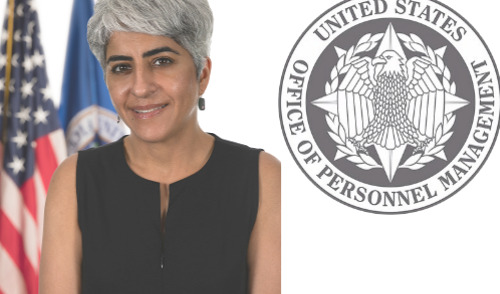
The director of the Office of Personnel Management (OPM) gives update on agency’s goals and progress after first year on the job.
Kiran Ahuja has now been the director of the Federal government’s human resource agency, OPM, for more than year now. She is the first (non-acting, Senate confirmed) OPM director to stay in the position that long since 2015. Recently, she shared with the press some updates regarding OPM’s current state and outlook. In Ahuja’s first year at the agency’s helm, the main focus has been revitalizing internship programs, working to improve the federal government’s hiring process, and implementing an executive order that aims to bolster diversity, equity, and inclusion across the wide landscape of federal agencies.
On Ahuja’s to-do list, the main theme is modernization. She wants to move the still paper-based retirement claim process for FERS and CSRS to a digital-based system, but as several OPM directors have learned before, this is no easy task. OPM itself has recently upgraded to a cloud-based contact center, which is a step in the right direction. Ahuja also emphasized that, internally, the agency is now “scanning records and documents” and phasing out paper-based filing systems.
Another goal communicated by the head of OPM was working toward waiving the caps on incentives for recruitment, retention, and relocation purposes. It is unclear if that would include the current $25,000 cap on VSIPs (Voluntary Separation Incentive Payments). Ahuja would also like the agency move away from reviewing and approving every agency request to “waive existing rules” and get closer to a system of periodic oversight. The agency directors main message to feds is that they themselves and their work in public serve “are valued.”
Check Out Our Complimentary Webinar Series on Federal Benefits.
—
Until Next Time,

The information has been obtained from sources considered reliable but we do not guarantee that the foregoing material is accurate or complete. Any opinions are those of Serving Those Who Serve writers and not necessarily those of RJFS or Raymond James. Any information is not a complete summary or statement of all available data necessary for making an investment decision and does not constitute a recommendation. Investing involves risk and you may incur a profit or loss regardless of strategy suggested. Every investor’s situation is unique and you should consider your investment goals, risk tolerance, and time horizon before making any investment or financial decision. Prior to making an investment decision, please consult with your financial advisor about your individual situation. While we are familiar with the tax provisions of the issues presented herein, as Financial Advisors of RJFS, we are not qualified to render advice on tax or legal matters. You should discuss tax or legal matters with the appropriate professional. **
The FedLife Podcast is your in-depth, biweekly deep dive into the world of federal benefits and retirement planning. Hosted by federal benefits expert Ed Zurndorfer and Dan Sipe of Serving Those Who Serve, each 30-minute episode unpacks the complexities of FERS and CSRS retirement, FEHB and Medicare, survivor benefits, tax planning, and more. Designed for federal employees and retirees who want more than just the basics, FedLife goes beyond the headlines to explore the rules, nuances, and strategies that can make a meaningful difference in your retirement. Remember: it’s your Fed life, make it a great one.

The Fed15 Podcast is your weekly 15(ish)-minute briefing on federal benefits and financial planning, built specifically for federal employees and retirees. Hosted by Dan Sipe and Katelyn Murray of Serving Those Who Serve, each episode delivers clear, actionable guidance on topics like FERS and CSRS retirement, TSP strategies, FEHB, survivor benefits, tax planning, and more! Whether you’re five years from retirement or already there, The Fed15 helps you cut through the noise, avoid costly mistakes, and make confident decisions about your federal benefits.